
Today, the success of your digital presence requires far more than producing content packed with keywords. While our SEO strategies have changed dramatically over the past 10 years, a new revolution is now at our door: GEO (Generative Engine Optimization) and AIO (AI Optimization). Google beginning to show AI-powered summary answers in its search results, and search engines integrating AI, are forcing us to rethink all of our web strategies.
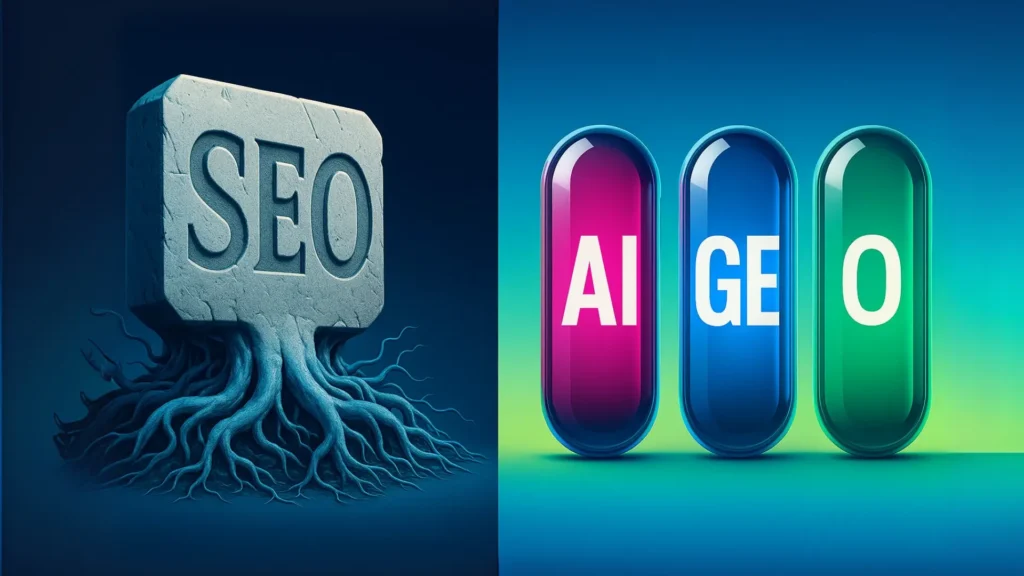
While helping websites develop their SEO strategies over the last five years, I have observed one thing very clearly: websites that fail to keep pace with change quickly lose their digital visibility. So what exactly does this new search paradigm mean, and how should you prepare your business for it? In this article, we will look at the transition from SEO to GEO, how AI is transforming search results, and the ways to succeed in this new landscape.
From SEO to GEO: What Is Changing?
For many years, search engine optimization (SEO) was the core strategy we used to increase the visibility of websites. Approaches such as keyword research, link building, technical optimization and high-quality content creation were the keys to ranking high on Google. However, the rapid development of artificial intelligence technologies, and especially the spread of generative AI, is fundamentally changing the nature of search results.
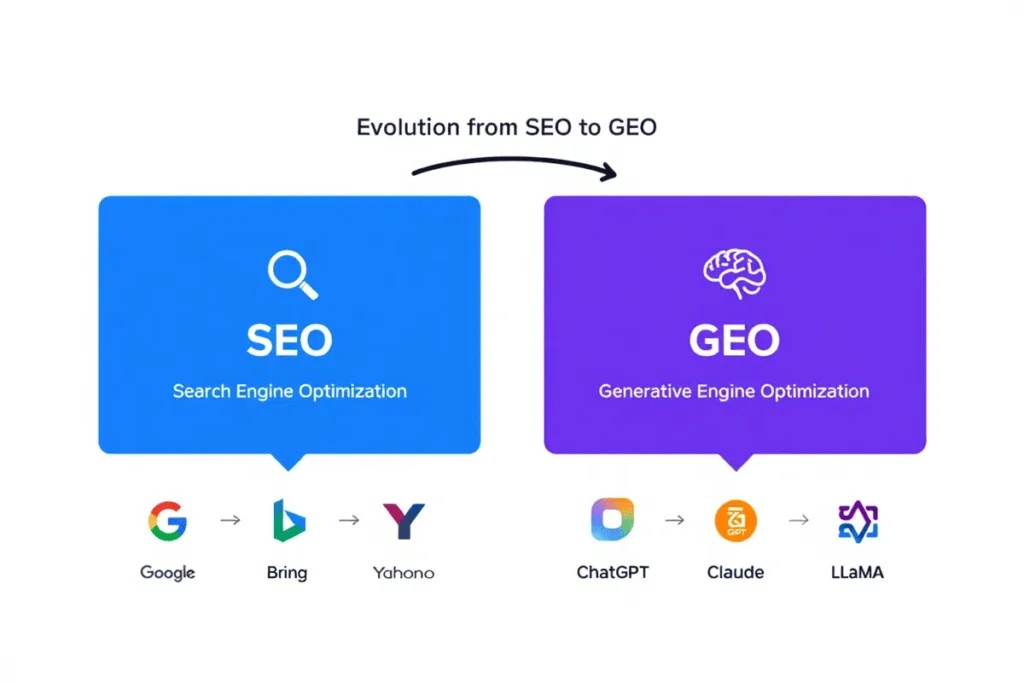
GEO (Generative Engine Optimization) refers to the new generation of optimization strategies developed to adapt to the way AI-powered search engines understand, interpret and summarize content. Google’s SGE (Search Generative Experience) feature and Bing’s AI-powered search results now give users direct answers without them having to visit any website.
Key Characteristics of GEO
The GEO approach differs from classic SEO in several important ways:
- Contextual Understanding: AI analyzes not only keywords but also the context of the content, user intent and the depth of the topic.
- Rich Content Value: Instead of superficial, keyword-focused content, comprehensive, original and value-adding content comes to the fore.
- Multimodal Content: Besides text, images, videos and interactive elements are better understood and evaluated by AI.
- Topical Authority: Rather than the optimization of a single page, a site’s overall authority on specific topics gains importance.
AIO (AI Optimization): Content Optimization for Artificial Intelligence
The concept of AIO covers the dedicated optimization work you do so that your content is better understood and evaluated by AI systems. Today, our content must be optimized not only for human readers but also for AI models.
Last year, when we restructured the product descriptions of one of our e-commerce clients according to AIO principles, we observed a 67% increase in their visibility in Google SGE. It was a striking example of the power of next-generation optimization.
Effective AIO Strategies
Here are some key strategies for optimizing your content for AI:
- Use Structured Data: Mark up your content with structured data formats such as Schema.org so that AI can understand it more easily.
- Answer Questions: Ask clear questions in your content and give comprehensive answers to them. AI systems use content in a question-and-answer format more often for summary answers.
- Semantic Richness: Include all the important terms, definitions and related concepts about your topic in the content.
- Freshness and Accuracy: AI systems rate up-to-date, verifiably accurate information more highly.
How Do Google SGE and AI Summary Answers Work?
When Google’s Search Generative Experience (SGE) feature was announced in 2023, it made a big splash in the industry. In response to users’ searches, SGE provides summary answers generated by artificial intelligence. These summaries compile information from various sources on the web to build a comprehensive answer to the user’s query.
SGE sits above the traditional organic results in the search results – meaning the user sees this AI summary before clicking on any website. This has the potential to significantly change web traffic dynamics.
Ways to Appear in SGE
Here are some basic principles for appearing as a source in SGE:
- Stay True to E-A-T Principles: The principles of Expertise, Authoritativeness and Trustworthiness are more important than ever.
- Offer Unique Information and Perspectives: AI finds original information and viewpoints that cannot be found elsewhere more valuable.
- Create Multimodal Content: Alongside text, add high-quality images, infographics, tables and videos.
- Clear and Straightforward Structure: Organize your content with a logical flow and distinct headings and subheadings.
Next-Generation Optimization Steps for WordPress Sites
Adapting to this new search paradigm is especially critical for WordPress users. WordPress’s flexible structure offers many advantages in the transition from SEO to GEO and AIO. Here are the steps to prepare your WordPress site for next-generation search results:
Technical Optimization
The foundation of next-generation optimization is still a solid technical infrastructure:
- Schema Markup: Add comprehensive structured data markup with plugins such as Yoast SEO or Rank Math. Use the Article, FAQ, HowTo and Product schema types in detail in particular.
- Speed Optimization: Optimize your Core Web Vitals metrics. AI crawling systems may analyze content on slow sites less thoroughly.
- Mobile Experience: Go beyond responsive design and deliver a flawless experience on mobile devices.
Revising Your Content Strategy
To adapt your content approach to the new search paradigm:
1. Create Topic Clusters: Instead of individual pages, develop comprehensive, interrelated content clusters. For example, under the main topic “WordPress Security”, cover subtopics such as security plugins, encryption, backups and attack prevention in detail.
2. Strengthen EEAT Principles: Emphasize Google’s principles of Experience, Expertise, Authoritativeness and Trustworthiness:
- Strengthen author bios and credibility
- Improve your practice of citing and attributing sources
- Update your content regularly
- Include expert opinions and industry data
3. Structure Your Content: Use content structures that AI can understand better:
- A logical heading hierarchy (H1, H2, H3)
- Summarizing introductory paragraphs
- Tables and structured comparisons
- Questions answered clearly
Practical Example: Optimizing a WordPress E-commerce Site
While working with a WordPress WooCommerce client recently, we achieved the following results by applying GEO and AIO principles:
- By adding detailed FAQ sections to product pages (both as content and as Schema markup), we increased visibility in Google SGE by 83%.
- We expanded the product descriptions to include technical specifications, usage scenarios and comparison tables.
- By adding a “Why this product?” section, we helped AI better understand the product’s unique value proposition.
- By collecting product reviews in a structured format, we made real user experiences visible in AI summaries.
Conclusion: Are You Ready for Next-Generation Search Results?
The move from SEO to GEO and AIO marks a new era in digital marketing. While this change creates challenges for some websites, it offers great opportunities for businesses that adapt and update their strategies. Being visible in the AI-powered search experience is no longer just a matter of following technical SEO rules – the quality, depth, originality and structure of your content matter more than ever.
As WordPress users, you can take the following steps right away to adapt to this change:
- Analyze your existing content through an AI lens and identify what needs structuring
- Expand and detail your schema markup
- Reorganize your content around questions and clear answers
- Deepen your content strategy by creating topic clusters
This new search paradigm creates an environment in which user-focused, value-adding and genuinely helpful content will win. Instead of abandoning the core principles of SEO entirely, you can prepare your digital presence for the future by extending them with a GEO and AIO perspective.
How is your site performing in next-generation search results? Have you started implementing AIO strategies? Share your experiences and questions in the comments, and let’s step into this new digital era together.